You must understand the Alaska fishing permit requirements before you enter any commercial fisheries in the state. Among the states in the US, Alaska has one of the most tightly controlled fishing systems. These measures aim to protect fish stocks whilst providing fair access.
The needs for an Alaska fishing permit are for sustainability, opportunity and compliance. Fishers are unable to harvest, sell, or buy fish commercially. At first glance, the system may seem complicated. The structure makes sense after analyzed, however, analysis must be gathered before.
If you are beginning to commercial fish or expanding into Alaska waters, knowing the eligibility rules, documentation standards, and licensing processes will shield your investment. This guide will detail the basics, compare types of permits, and suggest best practices to navigate the system efficiently.
Overview of Alaska Fishing Permit Requirements
Alaska uses a limited entry system regulated by the Commercial Fisheries Entry Commission. The system controls the availability of exemptions on a fishery. The objective is to avoid overcapitalization and safeguard fish.
The requirements for an Alaska fishing permit depend on the fish, tackle and area. Some fishing venues follow open entry. Some involve entry permits of limited duration, transferable and market-based.
| Permit Category | Entry Type | Transferable | Species Focus | Regulatory Oversight |
|---|---|---|---|---|
| Limited Entry Permit | Restricted | Yes | Salmon, Crab | CFEC |
| Interim Use Permit | Temporary | No | Emerging Fisheries | CFEC |
| Crew License | Individual | No | All Fisheries | ADF&G |
| Vessel License | Annual License | No | Commercial Use | ADF&G |
Limited entry permits are often very valuable. Under rigid criteria, they can be traded and sold. When entry limits have not been set for that fishery, interim permits apply.
Every commercial operator must also obtain an annual vessel permit. Crew members need personal licenses for legal participation.
This approach guarantees preservation and accountability. Each licensing tier must still be complied with.
Core Eligibility Criteria Defined – Alaska Fishing Permit Requirements
All fishing permits in Alaska have requirements that focus on four basic areas. These consist of residency status, fishery-specific authorization, vessels, and operational licences.
Immigration and Residency Status
Residency may not determine eligibility but does impacting fee structures. Residents of Alaska may receive certain fee benefits. Non-residents must continue to comply with the licensing laws in full.
Applicants must establish legally permitted commercial operation. This proof includes identity and tax compliance documents.
Authorization for Fisheries
Each commercial fishery has its own rules. Salmon fisheries tend to function under limited entry permits. You may need federal quota shares for halibut plus sablefish.
Usually consists of the following important elements
- Permit that is limited entry or interim
- Licensed vessel in operation.
- Licenses for crew members.
- Meeting reporting requirements.
Holders of permits must fish in designated areas only.
Conformity of Vessel and Operations
Vessels must comply with safety and registration standards. Insurance coverage and proper equipment are also needed.
For operational compliance precise catch reporting. If landings are not correctly reported, it could jeopardize the permit standing.
The state makes living up to its name. Strong enforcement gave rise to sustainability in the long-term.
Limited Entry and Open Fisheries Compared
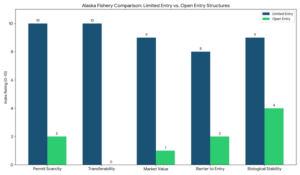
- Restrictive Entry permits are high-value assets with a market value rating of 9 out of 10. Because they have Fixed Scarcity (10/10), holders can sell or transfer them, making them ideal for long-term investment, unlike Open Entry permits, which hold Minimal (1/10) market value.
- The participation barrier in limited entry fisheries is rated as an 8/10 due to the high costs involved in purchasing a permit. Open Entry systems have an entry barrier of 2/10, so they are open to more players but competition is generally higher.
- The commonality between limited entry and other consumer price restrictions which a specialized entry relies on to earn unlimited monopoly gains is transferability 10/10 score to allow owners to lease or sell their right to fish. Open Entry licenses generally do not allow transfers (0/10), meaning holders cannot resell them.
Doing some work to meets these requirements
Knowing how to prepare to navigate Alaska fishing permit requirements. Prevention of costly delays through planning.
Determine the fishery you want to enter through identification. Examine whether the rule of limited or open entry applies. Reach out with regulatory agencies to verify documentation standards.
Before you apply, review these steps – Alaska Fishing Permit Requirements
- Check if you are eligible for fisheries and permits are available.
- Check vessel registration compliance.
- Obtain crew licensing documents.
- Make arrangements for financing of permit purchase.
Being financially ready can make or break you. Eminent domain can result in sizeable payments. Borrowing structures must match the seasonal revenue cycle.
Keep Accurate Records after Licensing. Proper Reporting Protects Permit Status Need to Submit in Time for Annual Renewals.
It’s possible that working alongside seasoned industry professionals may reduce the probability of making mistakes. Many new fishermen get help from a mentor or professional.
It is important to keep abreast of regulatory updates. Biological data influences the future of fisheries. Ensure Compliance With Monitoring Announcements.
Creating a compliant and sustainable business
Become informed on Alaska fishing permit requirements to help the fish as well as the fishermen. The organized framework encourages sustainable levels of harvest and long-term stability of the sector. Compliance is more than Administrative It is the basis of responsible commercial fishing.
Entry limits: create value and economic stability The problem with open access fisheries is that they are very accessible, yet they may have higher competition. Planning and compliance with licensing laws is important for both.
Eligibility verification entails checking the residence, authorized vessel, authorized fishery, and correct reporting. Alaska has an exceptional reputation for managing its fisheries, and resources like Commercial Fishing Permits Center can help vessel owners understand documentation requirements and maintain proper compliance with maritime regulations.
The permit system provides an opportunity for those who want to prepare. With a clear understanding of the requirements and an appropriate plan of action, commercial fishermen can operate confidently in Alaska’s waters.
No Comments
Be the first to start a conversation