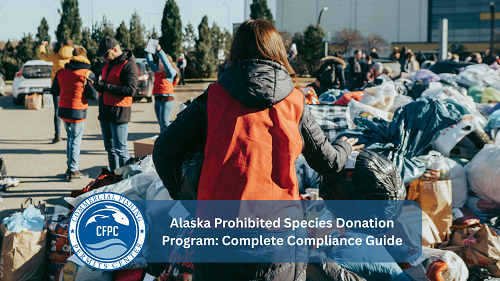
The Alaska Prohibited Species Donation Program is a fisheries management initiative designed to allow the donation of prohibited species caught incidentally for public benefit. The Alaska’s Prohibited Species Donation Program was initiated to limit waste, support communities and maintain strict conservation standards. It’s important for commercial fishing operators to learn about this program.
Some fish species in Alaska fisheries must be discarded or cannot be sold. Without a donation framework, the fish would all go to waste. A structured alternative is provided to benefit approved organizations through donation. This strategy integrates conservation goals and social accountability.
This manual explains the Alaska Prohibited Species Donation Program. It explains how the program operates, the eligible participants, and the reporting requirements. Other bycatch management strategies and practical guidance are compared. In the end, readers will learn how it promotes sustainability, compliance and benefit for the community.
Understanding the Alaska Prohibited Species Donation Program
The Alaska Prohibited Species Donation Program allows fishers to donate certain prohibited species rather than dispose of them. The economic sale of these species is generally restricted to protect fish. Your donation offers a legal and beneficial choice.
The program applies only under the defined circumstances. When you handle donated species, follow strict rules. Donation will not interfere with conservation objectives.
To participate, you must have approval and coordination with approved recipients of donations. This structure guarantees transparency and accountability.
Eligibility, Participation, and Donation Requirements
The Alaska Prohibited Species Donation Program has rules regarding eligibility and participation. The goal of these rules is to keep donation controlled and according to objectives of conservation.
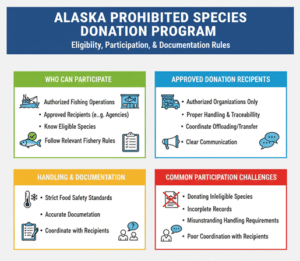
Who Can Participate
Only authorized fishing operations and approved recipients may participate. Fishing boats must follow the relevant fishery rules. Eligibility guarantees appropriate monitoring of donation.
Some fisheries or species are ineligible. Operators need to know which species can be donated. Mislabeling can cause breaches.
Approved Donation Recipients
Donations must be given to authorized organizations. This agency can receive and distribute fish. Approval guarantees proper handling and traceability. Contacting with beneficiaries is necessary. Procedures clear away any confusion with offloading and transfer. Communication aids compliance.
Handling and Documentation Requirements
Handle donated species under strict standards. These standards ensure compliance and food safety. Gifts must have documentation. Making use of accurate records controls and monitoring. Participation may be invalidated as a result of incomplete documentation. It is important to maintain a consistent recordkeeping.
Common Participation Challenges
- Donating ineligible species
- Incomplete donation records
- Misunderstanding handling requirements
- Poor coordination with recipients
Preparation and training can avoid these challenges. Unambiguous protocols minimize compliance threats.
Alaska Prohibited Species Donation Program Compared to Other Bycatch Approaches
The Alaska Prohibited Species Donation Program differs from regular discard requirements. It permits donation instead of compulsory disposal. This process balances conservation and social benefit.
| Management Approach | Outcome | Community Benefit |
|---|---|---|
| Mandatory Discard | Waste | None |
| Donation Program | Reduced waste | High |
| Retention for Sale | Not allowed | Not applicable |
Donation programs decrease waste without increasing fishing pressures. This maintains conservation goal.
Waste Reduction Comparison
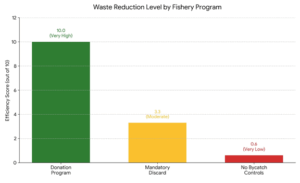
- Concern for Sustaining Fish Stock This program achieves a perfect score of $10.0$ for reducing waste because it is capable of addressing environmental problems while meeting social objectives, specifically repurposing of bycatch.
- Mandatory Discard policies are very inefficient since they get score of $3.3$. Though they discourage retaining species other than target species but do not avoid the initial waste of biological resource.
- The absence of Bycatch Controls receives a low risk rating of $0.6$. The very low waste reduction threatens the long term viability of the maritime sector.
Practical Guidance for Fishing Operators
Regularly reviewing the regulations avoids errors. Awareness diminishes enforcement danger. Create procedures for handling donations. Crew members should understand the documentation and transfer requirements. Training helps you stay steady.
Keep a record for each donation. Recording accurate logs ensures easy audits. Competent operators avert avoidable complications.
Best Practices to Follow
- Verify eligible species before donation
- Coordinate closely with approved recipients
- Maintain detailed donation records
- Review program rules each season
Following these practices supports smooth participation. Prepared operators contribute to program success.
Supporting Sustainability Through Responsible Donation
The Alaska Prohibited Species Donation Program is an effective fisheries management measure for Commercial Fishing Permits Center. It cut waste, supports communities, and meets conservation standards. When the operators understand the program, they participate.
This guide shows how the program works and who can participate. Also how it compares to other bycatch approaches. They included tips for supporting compliance. Knowledge lessens risk and uncertainty.
Participation in the Alaska Prohibited Species Donation Program by fishing operators helps ensure sustainability and community benefit. It ensures compliance to safeguard fishing rights and programs. Thanks to this balanced method, Alaska’s fisheries will remain both productive and responsible for years to come.
No Comments
Be the first to start a conversation