Atlantic Surfclam and Ocean Quahog fisheries are among the most highly managed shellfish fisheries in the United States. The New England and Mid-Atlantic coastal fisheries contribute to food production, processing industries and coastal employment. The regulatory framework is shaped by a long history that is focused on sustainability, efficiency, and integrity.
Ocean quahogs and surfclams are harvested with specialized vessels and gear, often offshore. Since these species are slow growing and long-lived, effective management is essential. Overharvesting can have far-reaching consequences, hence it is essential to regulate it through some quota system so that this can be successful in the longer run.
This publication offers an expert and comprehensive examination of Atlantic Surfclam and Ocean Quahog fisheries. The fishery details how the fishery works, why it is highly regulated and how you can comply. Familiarity with the fishery structure and objectives will allow stakeholders to make adequate choices on permit, quotas and operational planning.
Reviewing the Atlantic Surfclam and Ocean Quahog Trade
The Atlantic Surfclam and Ocean Quahog fisheries harvest two distinct clam species from the Atlantic ocean floor. Producers typically use surf clams in food products, while they process ocean quahogs into value-added products. The regional seafood market depends on both the species.
Restricted Access is a feature of this fishery. The authority controls access to the entry to minimize effort and protect stock health. Under specified quotas, regulators limit participants’ total catch to ensure sustainability.
Atlantic Surfclam and Ocean Quahog fisheries are important in predictability. With stable management, operators are confident to plan their investments and operations. It also offers protection for processing plants that rely on continuity of supply.
| Feature | Atlantic Surfclam (Spisula solidissima) | Ocean Quahog (Arctica islandica) |
|---|---|---|
| Growth Rate | Faster – Reaches commercial size in approximately 5–6 years. | Slower – One of the longest-lived animals on Earth; extremely slow maturation. |
| Typical Depth | Shallower offshore – Found primarily in the surf zone out to depths of 100 ft. | Deeper offshore – Prefers colder, deeper waters, typically ranging from 100 to 400+ ft. |
| Primary Use | Food products – Valued for large, meaty feet used in clam strips and “sushi” style prep. | Processing and ingredients – Thicker shells and tougher meat make them ideal for chowders and minced products. |
| Stock Longevity | Moderate – Lives up to 30 years; populations cycle relatively quickly. | Very long-lived – Can live for 200–500 years, requiring very conservative management. |
Management & Regulatory Framework
Atlantic Surfclam and Ocean Quahog fisheries function within a secure regulatory framework that manages stock and access to fishery.
Restrictions on access and quotas
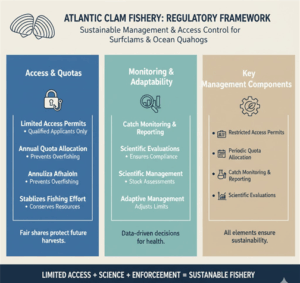
The fishery utilizes a quota-based system that distributes harvest entitlements to qualified applicants. Quotas specify the amount each operator may harvest in any one period. This system prevents overfishing.
Restricting access benefits to incumbent industry participants and stabilizes fishing effort. It helps conserve resource levels in accordance with scientific assessments.
Reviewing rules and regulations
Monitoring is of great importance in this fishery. When everyone abides by rules, it protects operators and fisheries.
Accurate collection of data allows for adaptive management. Regulators can responsibly adapt limits when conditions change. This approach balances the needs of the industry and conservation efforts.
Management components of key includes
- Permits for restricted access.
- Periodic allocation of quotas every year.
- Monitoring and reporting of the catch
- Evaluations made through scientifically sound methods.
All elements strengthen sustainable working.
Fishery Stability: Open vs. Limited Access Models
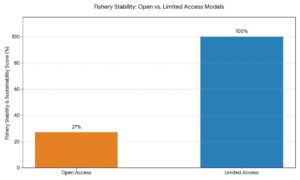
- Sustainability Anchor: Transitioning to Limited Access provides a 100% stability rating, thereby ensuring ocean quahogs harvesting levels for long-lived species will never be above the species’ slow biological replacement levels.
- Ending the “Race to Fish”: With open access with 27% achieving stability vessels were forced to harvest as fast as possible to outpace competitors; Our limited access allows for a slower pace which is based on markets preventing wastage and enhancing safety.
- Asset Value Protection: With a limited number of licenses for dredging, the fishery protects the economic value of the operations of each vessel. It allows owners to afford better quality hydraulic dredges and better processing technology.
- Data-Driven Management: The managed size of the fleet enables better monitoring, reporting and closure of the system with responses from scientists and regulators regarding adjustments to quotas, which can take place when the health of the stock is monitored.
The graph shows that limited access fisheries are more stable. It shows trends in performance over the long term.
Example of practical comparison
With open access, there could be effort surges and price instability in shellfish fishery. Conversely, Atlantic Surfclam and Ocean Quahog operators coordinate harvests at fixed quotas, ensuring supply and price steadiness.
This study shows how planned management is a boon for both industry and ecosystem.
Fishery Participants Guide
To be successful in Atlantic Surfclam and Ocean Quahog fisheries, planning and compliance are essential. Prior to each season, operators should understand quota limits. Effective planning minimizes the chance of overruns. Staying within allocated limits protects Longline Permit and avoids penalties. When we report accurately, we comply and we assess stocks.
It is important for operations to be efficient. Only vessel maintenance and crew training timing may affect profitability. Operations maximize value under quota constraints.
Long-term planning must start taking note of regulatory changes. Engaging with the management process aids in communication.
Beneficial best practices consist
- Check quota allocations carefully.
- Catch the live catching.
- Keep records that are correct.
- Keep yourself updated with management updates.
These practices help ensure stability
Relevance of Atlantic Surf clam and Ocean Quahog Fisheries. The Atlantic Surf clam and Ocean Quahog fisheries are important and well-managed Atlantic commercial fishing operations. Fisheries provide a balance of industry viability and long-term conservation through limited access, quota system and strong monitoring.
Operators enjoy predictability and security from the system. It provides reliable data and effective control tools to regulators. Commercial Fishing Permits Center It provides employment opportunities and processing infrastructure for coastal communities.
Knowledge of the structure and objectives of this fishery will allow stakeholders to act responsibly. The Atlantic Surf clam and Ocean Quahog fisheries show how smart management can help maintain a sustainable commercial fishery for years.
No Comments
Be the first to start a conversation