The state’s commercial fishing is highly relied upon for the food supply chain as well as coastal economy of California. California has more than 800 miles of Pacific coastline and one of the most diverse fishing industries in the USA. By taking species from Dungeness crab in the north to tuna off Southern California, commercial harvesters work in heavily regulated areas.
Only knowing what species groups are harvested is just part of the story in California commercial fishing. The industry also involves licensing arrangements, seasonal openings, quota management, and ecological protections. High-yield fishing is not always sustainable, so regulations are in place to safeguard the long-term health of marine ecosystems and support the working communities along California’s waterfront.
San Pedro, Monterey, and Crescent City are key disembarkation hubs. Fishermen can access various fish processors and distributors through these hubs to reach global markets. If you are new to the sector or want to know more about how it works, this overview describes the structure, jobs, and opportunities in California commercial fisheries.
California’s Commercial Fisheries: Structure and Importance
Fishing in California offers work to many thousands. Local fish markets and foreign buyers procured fish from commercial harvesters. The state differs from many coastal states in species richness.
The sectors of crab, groundfish, tuna and sardines. Not all fisheries are governed by the same rules. Certain governmental agencies basically run the show. At times other boats come under federal authority offshore.
Fishermen aren’t only impacted by the economy. It is important for boat builders, fuel suppliers, dockworkers and seafood processors to have a consistent landing. The activities and earning cycles of ports are seasonal.
| Fishery Type | Primary Species | Managed By | Season Type | Revenue Stability |
|---|---|---|---|---|
| Crab Fishery | Dungeness Crab | State | Seasonal | High (Short Term) |
| Groundfish Fishery | Rockfish, Lingcod | Federal & State | Quota-Based | Stable |
| Sardine Fishery | Pacific Sardine | Federal | Seasonal | Variable |
| Tuna Fishery | Albacore Tuna | Federal | Migratory | Moderate |
Each fishery contributes differently to annual earnings. Crab season brings economic boom but it’s short-lived. Groundfish operations provide improved harvest windows.
Sustainability policies keep existing fish stocks safe. Controlled access prevents resource depletion. This industry is designed for long-term sustainability.
Compliance and Compliance Requirements
California demands much from those engaging in commercial fishing. Government permit for commercial fishing serve as the foundation. The type of species and fishing gear determined whether an additional permit was needed.
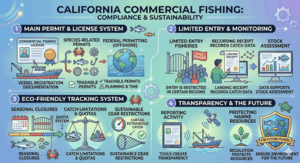
Main Permit and License System
- License for commercial fishing.
- Vessel Registration Documentation
- Species-related permits.
- Federal permitting for offshore waters.
Entry to the fisheries is limited in certain parts which are in high demand. These permits are tradable in most cases. Gaining approval often takes time and planning.
A landing receipt records the capture of varieties and species. Staff enter the records into monitoring programs. They must accurately determine the stock assessment.
Eco-Friendly Tracking System
Regulation is one way toward protecting marine resources. The seasonal closures allow spawning cycles in California. Catch limitations are imposed by quota systems on sensitive fisheries.
Groundfish fisheries often utilize individual fishing quotas. After testing, public standards will open crab fisheries. The capture of tuna will depend on migration patterns and federal regulations.
Tools help create transparency for report activity Sustainable gear restrictions curtail extraneous catch. We will protect the environment for fishers of the future.
Operations of Fishery for Comparison – California Commercial Fishing
Equipment, fuel and crew coordination levels differ between fisheries. Certain jobs are near coast. Some need to go on a trip.
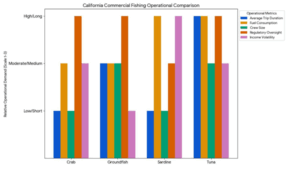
- The tuna and sardine fisheries have maximum operational requirements and demands on fuel consumption and operational cost in view of their high mobility and high input requirement.
- Groundfish vessels generate the least fluctuating income which indicates greater stability; they engage in moderate time period trawls with less crew.
- Most fisheries are subject to regulation. Authorities strictly regulate Crab, Groundfish and Tuna, indicating management of some fisheries.
Strategic Planning Design for the Whole Life
With proper planning, California commercial fishing can be successful. Adaptability is important because of the uncertainty in the industry.
Strategies for Planning – California Commercial Fishing
- Regularly update the monitor.
- Going through seasonal forecasts and stock assessments.
- Maintaining logbooks for safety and compliance of vessels.
- Anticipating permit renewals and fuel cost changes.
Amalgamation of various fisheries can help in the stabilization of earnings. Some operators switch from crab fishing for winter to tuna fishing for summer. Vessel using strategy via scheduling.
Market trends can affect profitability. Market conditions influence seafood prices as demand and supply vary. You can enhance your negotiating power by building relationships with your buyers.
Planning maintenance reduces downtime during peak season. Insurance that protects your assets and people. Investing into reliable routing systems boosts productivity.
Newcomers should seek counsel from seasoned captains. Industry Associations are constantly providing useful information on changes in policy. Awareness may lower compliance problems.
California Commercial Fishing – Summary
California commercial fishing strives to balance profitability with resource protection. Many fishing jobs support coastal communities and supply seafood markets across the country. Licensing, quotas, and careful management help ensure the long-term health of these vital marine resources, guided by the regulations promoted through the Commercial Fishing Permits Center.
Different Sectors in Fisheries have different demands different species of fish and crab have their own cycles. Using strategic budgeting helps adjust to seasonal changes.
Sustainability, monitoring, regulation must be in place for longevity. Compliance framework instills confidence in fishermen. Bigger the market, more options at your disposal.
Whatever happens to California’s ocean, we can learn to deal. Commercial fishing permits, zones and structures, as well as differences in operation, can help these companies meet current challenges and promote future growth.
No Comments
Be the first to start a conversation