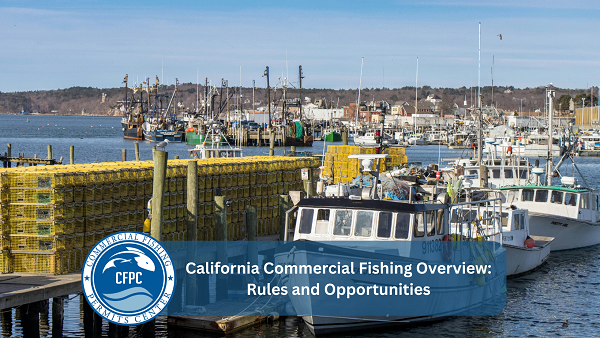
A California commercial fishing overview assists fishermen, investors, and coastal businesses in gaining a better understanding of one of the most diverse fisheries in the nation. California’s coastal areas are home to crab, salmon, tuna, sea urchin, squid, and groundfish. Every industry has a specific regulatory framework that ensures it continues to grow without damaging the oceans.
This California Commercial Fishing Overview explains how it works. It also explains who oversees it and what the fishermen must know. The state merges traditional methods and modern manager approaches. Measuring, seasonal closures and quota systems are in place to protect fish stocks and jobs.
Whether an individual is looking into a new fishery or reviewing licensing requirements, knowing what California’s fisheries are reduces confusion. The process requires preparation consisting of permits and compliance with your vessel. If done right, there is a huge prospect for the industry on the Pacific.
California’s Commercial Fishing Industry Structure
California’s fisheries operate under the authority of the state and the federal government. The management of various nearshore fisheries is undertaken by the California Department of Fish and Wildlife. Offshore and highly migratory species fall under federal agency oversight.
The business involves both small family-run boats and large operations. Many coastal towns are dependent on seasonal harvests. Major landing ports include San Pedro, Monterey, and Eureka among others.
| Fishery Type | Main Species | Management Level | Permit Requirement | Seasonality |
|---|---|---|---|---|
| Dungeness Crab | Crab | State | Limited Entry | Seasonal |
| Salmon | Chinook | State/Federal | Limited Entry | Highly Regulated |
| Squid Market | Squid | State | Permit Required | Seasonal Peaks |
| Highly Migratory | Tuna, Swordfish | Federal | Federal Permit | Variable |
Access to high-value fisheries is restricted through programs. These programs limit the amount of active permits. Fish stocks and income stabilizing are protected through.
Commercially operating a vessel requires a licence. Submission of landing reports by fishermen is mandated. Accurate reporting helps sustain harvest limits.
A complete overview of the commercial fishing industry in California must recognize how biological science shapes economics. Permits, closures and gear restriction determined by stock assessment.
Rules and Regulations
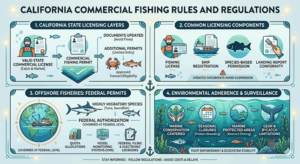
Fishermen must be aware that licensing is in layers before they can enter the industry. Depending on species, area and type of gear.
State Do Fishing License
Every California commercial fisherman must have a valid commercial fishing permit. This license is the basic license for catching and marketing a fishery product.
More permits might also apply. To illustrate, there are limited entry systems for crab and salmon fisheries. Applicants must get a permit through approved transact or eligibility.
Components of Licensing Commonly Include
- Fishing license.
- Ship Registration.
- Species-based permission.
- Landing report conformity.
If you do not keep your documents updated, you may be fined or suspended.
Offshore Fisheries Federal Permits
Certain fisheries are governed at the federal level. Species highly migratory like tuna and swordfish require federal authorization. The permits can include quota allocations or vessel monitoring systems.
Operators must comply with federal filing requirements. Federally controlled fisheries often utilize electronic logbooks.
Environmental Adherence and Surveillance
California’s management system continues to centre on marine conservation. Seasonal closures safeguard breeding seasons. Marine protected areas restrict fishing in certain places.
Fishermen must follow limitations on gear and bycatch. Permit eligibility may be impacted by violations. Tight enforcement assures ecosystem stability.
Comprehending regulatory layers avoids costly operating breaks.
A Comparison of California’s Fisheries
The fisheries of California largely vary in structure, profitability, and risk. There is a seasonal income from some. It depends heavily on the market.
- Crab and squid fisheries offer the highest profitability potential and market stability. Yet, while crab operators deal with high entry costs and reduced season length, squid operators enjoy few threats to sustainability.
- The salmon fisheries have the highest regulatory burden as salmon stocks are quite variable and permit costs are high and seasons are shorter.
- Unlike the other fisheries, tuna ones can have prolonged seasons, but profitability varies, as depending upon global demand and operation costs like fuel, it fluctuates.
Real-World Measures for Getting Into the Industry
To get into California’s commercial fishing involves planning and investment as well as being aware of regulatory requirements. Choose the fishery you want to spend on. Inquire about its permit system and seasonal window.
- Adhere to this structure.
- Verify eligibility for a permit.
- Ensure the safety of vessels and commercial spaces.
- Check equipment and reporting requirements.
Create an operating and financing plan
Financial planning is still important. Permits for limited entry often command a high price. Loan arrangements should take into consideration seasonal income cycles. Ensure vessel compliance next. Regulations on insurance, safety inspections and gear differ by fishery. When you set your targets and stay focused, you can achieve them.
New operators should communicate with port authorities and fishing associations. These groups offer advice about landing procedures and market links. Some operators have a presence in multiple different fisheries seasonally.
Opportunity along the Pacific Coast
Commercial Fishing Permits Center is described as dynamic and heavily regulated. The state fosters economic opportunity while protecting the environment. Licensing systems, entry restrictions, and federal oversight affect how we operate every day.
Fishery offers its own pros and cons. Crab and salmon provide structural stability. The capacity of squid and tuna depends on larger market forces. Careful planning and regulatory compliance remain essential.
New entrants have less uncertainty around permit, reporting and seasonality. Operators who are up to date protection their profitability on the long run.
California’s commercial fisheries keep on supporting member communities and national seafood markets. Fishermen can confidently operate within this framework if they prepare disciplined and respect conservation rules.
No Comments
Be the first to start a conversation