To catch Chinook salmon in Alaska, a commercial permit must be obtained. Chinook salmon was formerly referred to and known as King Salmon. Chinook salmon, or king salmon, represent both an economic opportunity and a conservation responsibility. Alaska has stringent entry controls and seasonal restrictions in place on the taking of these fish.
The Commercial Chinook Salmon Permit Alaska allows operators to harvest Chinook salmon in designated areas according to state regulations. This limited entry system is designed to protect spawning stocks while supporting a sustainable commercial harvest. Before entering this fishery, professionals must understand permit types, regional rules, and the economic considerations involved.
This guide describes how Chinook permits work, what regional permits are available and offers practical tips for getting and using one. Your best asset remains knowledge whether you are entering the industry or expanding.
Alaska Chinook salmon Permit System Overview Summary
Alaska’s Chinook salmon fisheries have limited entry management regimes. The Commercial Fisheries Entry Commission restricts entry for resource conservation. Only authorized persons are permitted to fish in designated areas.
The limited entry scheme restricts the number of permits. Many fisheries require the acquisition of a transfer permit. Permit availability usually mirrors previous participation and biological capability.
The stocks of Chinook vary yearly. Management decisions in-season biological assessments adjust seasons and harvest limits. The most important thing about all permits is conservation.
| Permit Category | Gear Type | Entry Type | Transferable | Primary Regions |
|---|---|---|---|---|
| Drift Gillnet Permit | Drift Net | Limited Entry | Yes | Southeast, Cook Inlet |
| Set Net Permit | Fixed Net | Limited Entry | Yes | Cook Inlet |
| Troll Permit | Hook & Line | Limited Entry | Yes | Southeast Alaska |
| Area-Specific Salmon | Mixed Gear | Restricted | Varies | Bristol Bay |
Different types of permits allow different gear and places. Movable fishing zones are provided by drift gillnets. Net permits are operated from fixed shore locations.
Those who hold a permit must keep their commercial license active. Ship compliance and reporting accuracy are still required. You may receive penalties or a suspension for violations.
Access and sustainability are well balanced. Alaska ensures salmon runs will remain stable in the future and prevents harm to the economy by limiting participation.
A Regulatory Requirements Application Process
Obtaining a commercial Chinook salmon permit Alaska takes preparation and financial planning. Depending on whether you are buying a transferable permit or entering an open category fishery you will need to follow different processes.
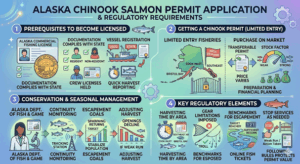
Prerequisites to Become Licensed
Eligible candidates must have an Alaska commercial fishing license. Being a resident does not guarantee eligibility but the documentation has to comply with the state. Vessel registration must comply with Coast Guard or state rules.
A number of Chinook fisheries operate under limited entry. Operators that are looking to operate will purchase permits on the market. The price of permits varies according to stock factor and area. Quick reporting of catches through formal systems must occur. Harvest documentation helps safeguard both fishermen and fish stocks.
Maintaining Conservation and Seasonal Management
Salmon populations are monitored continuously by Alaska’s Department of Fish and Game. Scientists monitor escapement goals to ensure sufficient spawning returns. If running appear weak could see harvest openings decline.
Regulatory elements key include
- Harvesting time by area
- Gear limitations imposed by fisheries
- Benchmarks for escapement.
- Stop services as needed.
Fisheries managers allow salmon to return as escapement targets to reach spawning grounds. Achieving these targets helps stabilize the population.
Online fish tickets note catches. Regulatory discipline strengthens the credibility of the industry.
Variation in Region and Values of Permit
Chinook fisheries did not all offer similar opportunity. Permit value and earning potential affected by regional performance.
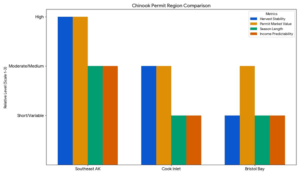
- Within Southeast Alaska, the harvest stability and permit market value are nearly equivalent to that of the entire state, as a result of a stable and consistent troll fishery.
- The predictability of income and stability of harvest in Cook Inlet and Bristol Bay is variable. This is often due to the environment and the strength of the run.
- Value of the permit correlates with greater harvest stability and average season length in southeast Alaska. Higher value will almost certainly correlate with the permit plan limit and not the actual flow (eg. value exceeds average historical flow, providing clear evidence).
Easy Steps to Obtain and Control a Permit
Successful participation in the Chinook salmon fishery involves planning. Preparation followed by disciplined compliance defines success.
Think about the following steps – Chinook Salmon Permit Alaska
- Examine past harvest records for focus areas.
- Look back at sales history and pricing trends.
- Check environmental compliance of vessel gear.
- Always report any catch accurately throughout the season.
Financial planning is important. Permit purchases can be a significant expense. Lenders specializing in consulting may offer financing.
Experienced captains provide invaluable hands-on tips. Weather patterns, fuel logistics, and crew management influence profitability. Improving efficiency makes sustainability possible.
Investment protection through risk management. Keep track of regulatory proclamations. Modify activity as per biological forecasts.
Conducting operations with discipline prolongs permits. Past compliance affects regulatory status. Responsible management will preserve future possibilities.
Create a sustainable Chinook Salmon Permit Alaska
The Commercial Chinook Salmon Permit Alaska provides access to one of the world’s most renowned fisheries, but with this opportunity comes responsibility. Alaska’s limited entry system safeguards fish populations while supporting economic viability.
Understanding permit types, zoning, and conservation practices helps reduce financial risk and inform profitable investment decisions. By combining careful planning with regulatory awareness, fishermen can ensure both compliance and sustainability. Chinook salmon represent history and opportunity, and when operators respect biological limits, their permits become more than licenses—they become enduring professional assets managed through the Commercial Fishing Permits Center.
No Comments
Be the first to start a conversation