The permit to groundfish mothership cooperative enables eligible vessels to operate within the coast groundfish mothership cooperative fishery ground. The fishery performs an essential function in the harvest and processing of groundfish and improving efficiency, safety, and sustainability. By having a cooperative setup where they have definite rules, participants manage harvest and delivery activities.
Due to the complex nature of groundfish fisheries, including mixed species catch and bycatch issues, uncertainty also arises as how best to achieve conservation objectives. Mothership sector faces these challenges by pairing catcher vessels with mob ship processors to create an organized and accountable harvesting. Permits ensure that participation is regulated and aligned with management.
This article has a professional and detailed description of the Groundfish Mothership Cooperative Permit. The permit works, the rationale behind the cooperative model, the differences from other groundfish sectors and how operators can efficiently manage compliance. Anyone involved in the West Coast groundfish mothership fishery must read this permit.
Summary of the Groundfish Mothership Cooperative Permit
The Groundfish Mothership Cooperative Permit allows involvement in a cooperative-based fishery for groundfish in which catcher vessels deliver fish to mothership processors at sea. Working together can save them money, coordinate their efforts, and reduce waste.
This Permit is designed to facilitate the sustainable harvest of groundfish species while minimizing bycatch and discard. People in the cooperative discussions agree on how to harvest and when to deliver. Thus, it reduces the race to fish that is common in open access fisheries. Permits define who may participate.
The Groundfish Mothership Cooperative Permit is important because it offers stability. Limited participation of authorized cooperative members will assist managers to forecast their efforts and outcome tracking. It is an advantage to both industries and regulators.
The permit gives participants safe entry to the fishery. This makes it possible to plan for the long term, invest in vessel upgrading and establish a cooperative relationship with fish processors. An explicit authorization mitigates uncertainty and risk of enforcement.
| Aspect | Cooperative Fishery | Non-Cooperative Fishery |
|---|---|---|
| Harvest Coordination | High – Vessels synchronize schedules to avoid market gluts and optimize processing. | Limited – Individual vessels compete for the same stock, leading to erratic landings. |
| Bycatch Management | Strong – Shared data allows the fleet to identify and avoid “hotspots” of non-target species. | More Challenging – Competitive pressure often leads to higher bycatch as boats prioritize speed over precision. |
| Economic Stability | Higher – Fixed shares of the catch allow for long-term planning and steady revenue streams. | Volatile – Income depends on being the first to the grounds; market prices often crash due to oversupply. |
| Operational Efficiency | Optimized – Consolidated trips and shared logistics reduce fuel consumption and wear on gear. | Variable – Redundant efforts and excessive steaming time lower the overall return on investment. |
The Mothership Cooperative System and Its Functioning
Organizational permission of Groundfish Mothership Fishery cooperative within the structure management system of access, efficiency and conservation.
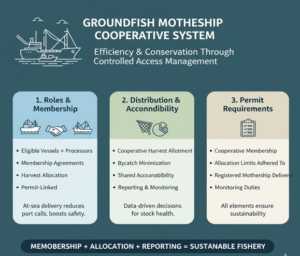
Roles and membership of cooperative
Participation is limited to the eligible catcher vessels and mothership processors. Membership happens through agreements that define responsibilities and harvests allocation. The vessels are linked to the cooperative framework via permit.
Fishermen on catcher vessels harvest groundfish and deliver their catches to mothership processors at sea. Motherships carry out product processing and storage, reducing the need for calls at port. By using this model, safety and efficiency can be improved.
Distribution, supervision, and answerability
Allotment of harvest is done within the cooperative. Our members work together to limit and/or minimize bycatch. Shared accountability promotes adherence and responsible conduct.
There are monitoring and reporting requirements for all participants. Accurate data bolster stock assessments and management choices. Oversight by cooperation is enforcement.
Permit-Related Requirements Mostly Include
- Membership in a recognized cooperative.
- Allocation limit is not to be breached.
- Delivering to registered mothership processors.
- Duties of reporting and monitoring
Each from them ensures sustainability.
Comparing Mothership Sector with Other Groundfish Sectors
The Groundfish Mothership Cooperative Permit sets this sector apart from other groundfish fisheries through its cooperative and at-sea processing model.
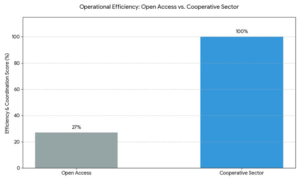
- Synchronized Success: When you move to a Cooperative Sector, your operation will synchronize at 100% efficiency. This is achieved by replacing the frantic race to fish with a scheduled landing system to keep the Mothership processing at full capacity.
- Intelligence Sharing: Cooperatives share their information in real time to steer the entire fleet away from bycatch hotspots and towards high density target areas. Open Access (27%) has data and information that is treated as a secret.
- Infrastructure Synergy: Cooperatives can coordinate supply through sharing of tender vessels, fuel deliveries etc which can drastically reduce the dead time and high overhead costs of the independent un-coordinated models.
- Market Price Protection: The whole sector benefits from a more stable and higher average price as there is no more forecastable market gluts in this activity e.g. simultaneous death of fish shoals.
Cooperative sectors have shown higher efficiency levels. Though stripped down, it reflects reality.
Comparison example in practice
In a fishery open to everyone, the vessels may end up competing aggressively, which will lead to a short season and greater bycatch risk in the fishery. Harvesting takes place at different time periods in the mothership cooperative, thus reducing waste.
This comparison indicates why the cooperative model is popular.
How to Apply for a Permit
Management of a Groundfish Mothership Cooperative Permit requires coordination. Holders of permits should understand cooperative agreements. A clear understanding effectively avoids internal quarrels
It is essential to monitor harvest levels. Remaining within allocations protects the individual Mothership vessel and the co-operative. Awareness in real time assists with compliance.
It is important to meet reporting duties consistently. Timely and accurate reporting upholds the status of the permits and assists with the management objectives. Negative reporting may have ramifications for the entire cooperative.
It is extremely important for members to communicate with one another. Planning and transparency help to increase performance and trust. The support we give one another is essential to success.
Practices that are useful include
- Periodically check cooperative partnerships.
- Monitor harvest and delivery details closely.
- Always submit mandatory reports on time
- Keep informed of what others are doing
They help things run smoothly.
Reasons why the Groundfish Mothership Coop Permit matters
Groundfish Mothership Cooperative Permit is one of the most important components of the groundfish fishery on the West Coast. It maintains an orderly, productive, and responsible fishery that balances economic opportunity with conservation.
For industry players, the permit ensures steady access and operations. Commercial Fishing Permits Center managers can effectively monitor its operations and obtain trustworthy information from it. It lowers pressure and waste through coordinated harvest, thereby benefiting ecosystem. Participants understand permit requirements and volunteer their efforts to operate responsibly and profitably.
No Comments
Be the first to start a conversation