Due to bycatch limits, mixed catches, and conservation requirements, groundfish fisheries are quite challenging. The mothership cooperative sector was created to strengthen coordination instead of competition among cooperatives. Organizing vessels into cooperatives improves effort and area assessment, monitoring, and adjustment. The Groundfish Mothership Cooperative Permit is detailed and professional article in this section. It explains how the permit operates, why it exists, how it compares to other groundfish sectors, and how operators can comply with it. If you are involved in the mothership fishery for the West Coast groundfish, it is important to understand this permit.
Sustainable Groundfish Mothership Cooperative System
The Groundfish Mothership Cooperative Permit allows participation in a groundfish sector in which catcher vessels harvest groundfish and deliver catches to at-sea mothership processors. These processors sort, process, and store the catch, enabling the fishing operations to stay offshore longer.
The coordinated harvest planning phase replaces the race to fish phase. Members of the group will agree on catch strategies, delivery schedules, and allocation use. There are a lot of advantages related to the given situation.
Predictability is key for the Groundfish Mothership Cooperative Permit. Managers are able to better estimate effort and monitor outcomes. Members of the industry benefit from reliable access and less uncertainty in operations.
The permit assists in the sustainable management of groundfish species. Being accountable to one another can encourage members to avoid bycatch.
| Aspect | Cooperative Sector | Non-Cooperative Sector |
|---|---|---|
| Coordinated Catch Planning | High | Limited |
| Bycatch Reduction Measures | Strong | More difficult |
| Stable Fishing Seasons | Extended | Often compressed |
| Business Sustainability | Higher | Variable |
Operations of Mothership Network Coordination System
The Mothership Cooperative permit for groundfish is the appropriate way to manage the permitting of vessel members and is sanctioned by all relevant stakeholders through the management framework.
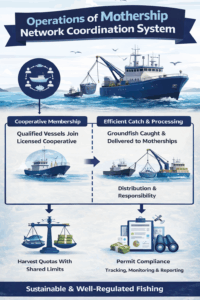
Membership in cooperatives and Function of vessels
Participation allowed only to eligible catcher vessels and mothership processors. Membership is defined by their mutual agreements which specify responsibilities and allocation use. The permit connects vessels directly to this cooperative arrangement.
Groundfish species are harvested by catcher vessels and delivered to designated motherships at sea. Mothership equipment will receive, process and store fish, reducing the frequency of port returns. This enhances safe efficiency.
Distribution, supervision, and responsibility
Management authorities assign harvest allocations to the cooperative, and the cooperative distributes them among its members. The members of the cooperative organize their fishing effectively to stay within the limits and avoid bycatch.
All participants must meet the monitoring and reporting requirements. Fishing data supports stock assessments and regulation. Shared responsibility strengthens adherence to rules and good actions.
Permit-related requirements are common
- Joining a licensed cooperative.
- Adhering to harvest quotas
- Mothership processors that are authorized receive deliveries.
- Reliable Tracking and Monitoring
Every requirement advocates sustainable operations.
Comparison of the Mothership Sector with Other Groundfish Sectors
The Groundfish Mothership Cooperative Permit distinguishes this sector from other groundfish fisheries through its cooperative structure and at-sea processing model.
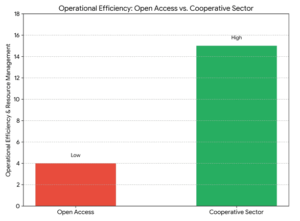
Showing sector efficiency
- The Cooperative Sector is more efficient than the Open Access sector, because the cooperative sector members coordinate their efforts, meaning they will spread out supply over time. In the open access sector, members will tend to aggressive competition which compresses the season.
- Mothership cooperatives reduce waste caused by catching unwanted species by coordinating where and when vessels fish, unlike open-access competition, which increases ecological harm.
- Collaboratively managing of permits allows the sector to achieve better economic outcomes and ensure that the vessels are able to fish optimally and not under pressure from a short-lived derby.
Real-World Tips for Licensees
Groundfish Mothership Cooperative Permit needs coordination and diligence. Understand cooperative agreements by permit holders. Having clear expectations mitigates clashes.
Harvest level monitoring is essential. Staying within limits benefits individual vessels and the cooperative. Real-time awareness helps with compliance and planning.
Consistent fulfilment of reporting obligations. Consistent reporting lets the manager know their permit is in good standing. Inaccurate reporting may harm an entire cooperative.
It is very important the members communicate among each other. Building trust and enhancing performance through a transparent process. By working together, we can build something great.
You might find the following best practices helpful for Groundfish Mothership Cooperative Permit
- Regularly check cooperative agreements.
- Closely monitor harvesting and delivery data.
- On time submission of reports.
- Communicate freely and frequently in the cop-operation.
These practices support seamless operations.
Importance of the Groundfish Mothership Cooperative Permit
Groundfish Management of Commercial Fishing Permits Center refers to existing fishery management plans and regulations affecting actual or potential groundfish fisheries. It promotes an orderly, efficient, and accountable fishery that balances economic opportunity with conservation objectives.
The permit provides industry participants with security and operational stability. Managers have dependable supervision and information. For ocean ecosystems, it eases pressure through concerted harvest and bycatch control.
Participants can operate and profit conveniently if aware of permit requirements and cooperative principles. The Groundfish Mothership Cooperative Permit shows how collaborative management adds value in complex commercial fisheries.
No Comments
Be the first to start a conversation