Anyone who participates in South Region Commercial Fishing Permits activities in southern waters must have a South Region Commercial Fishing Permit. The permits stipulate who can fish, where they can fish, and what the harvest conditions are. In the South Region, operators need a permit to legally operate, but a permit is much more than a legal document. It’s a planning tool that operators use daily.
The South Region has a broad spectrum of fisheries species and fishing methods. A structured permit system that provides fair access while preventing abuse and overuse. Fisheries will be over-exploited, conflict-ridden and uncertain. Fishing activities become predictable, controllable and transparent with permits.
This article gives elaborated and professional information related to the commercial fishing permits for the South Region. It describes what they are, how they work, what is different from elsewhere, as well as how fishers can manage permit obligations. No matter if you are a newcomer or an old hand, this guide helps bring clarity on expectations when it comes to commercial fishing operations that meet standards.
Summary of commercial fishing permits for the south region
Permits for Commercial Fishing in the South Region allow for the commercial harvest of fish in certain fishing areas of the south. Every permit outlines the fishing what (i.e. species, gear type, area of operation). Fisheries management and enforcement depends of these permits.
We manage access to the fishery through the permit system. Regulators manage fishing pressures to aid local ecosystems through limited access. How does it help to keep them productive?
Fishers gain assurance via permits. Understanding what the operator can do helps to plan investment, crew timing, and market commitment. Clear rules lower the chances of conflict and enforcement risks.
From the management’s perspective, permits facilitate information gathering and monitoring. Permit records assist in monitoring engagement, input levels, and compliance trends. Such information can guide future policy decisions.
| Aspect | Permitted Operations | Unpermitted Operations |
|---|---|---|
| Legal status | Authorized | Illegal |
| Operational certainty | High | None |
| Resource sustainability | Supported | At risk |
| Enforcement risk | Low | Very high |
This comparison shows the importance of permits.
Varieties of Licenses and Regulatory Framework
The type of fishery, targeted species or species and method of fishing determine the South Region Commercial Fishing Permits. Getting to know permit categories is key to compliance.
Types of permits and access restrictions
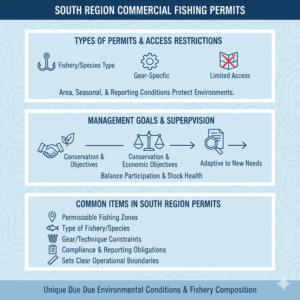
Various fisheries need various permits. Some permits are generally applicable while others may be species-specific or gear-specific. You may not be able to get in.
Area restrictions, seasonal restrictions and reporting requirements are commonly included as permit conditions. These conditions safeguard fragile environments and breeding seasons.
Management goals and supervision
The permit system will achieve both conservation and economic objectives. Permits help regulators strike a balance between participation and stock health. Close supervision is an essential part of controlling the changes.
Adjustments over time are permitted in reviews and renewals. As conditions change, permit structures may change to suit new needs.
Permits in South Region usually contain common items
- Permissible fishing zones.
- Type of fishery or species.
- Constraints of equipment or technique.
- Obligations pertaining to the compliance and reporting.
- Every element sets clear operational boundaries.
The South Region Commercial Fishing Permits Are Different from Other Regions Due To Environmental Conditions And Fishery Composition.
Flexibility permit
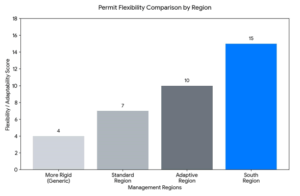
- The South Region has the least restrictions on permits compared to the more stringent management frameworks of the other Regions.
- Adaptive Management Practices: This flexibility reflects modern, adaptive management approaches which allow for more responsive regulatory environments.
- Able to sustain their business and operations over the long term due to high flexibility of fishers to adjust operations as per seasonal conditions.
How to Manage Permits Effectively
Dealing With Commercial Fishing Permits For the South atlantic. Fishers must consult permit conditions prior to each season. Relating to inappropriate behavior.
It is important to track renewal dates. Expired licensing can cause operations to stop suddenly. Prepare early for continuity.
Accurate reporting aids conformity. Most permits require timely catch and effort data. Reliable reporting safeguards permit standing.
It is equally important to be aware of regulations. Caribbean Possible Activity Changes In Future Awareness helps in easy adjustment.
Best practices that help
- Periodically assess permit requirements.
- Deadlines for tracking renewal and reporting.
- keep records accurate operations
- Keep an eye on regulations.
Follow these procedures to reduce compliance risk.
The Importance of South Region Commercial Fishing Permits
South Region Commercial Fishing Permits ensure your fishing operations are legal and sustainable. Commercial Fishing Permits Center Varied southern fisheries are provided’ structure, predictability and accountability. Risking lives and livelihoods without valid permits.
Permits clarify fishers’ rights and responsibilities. They offer managers tools to guard stocks and watch activity. They help sustain long-term economic stability.
Operators can fish confidently and responsibly by understanding the permit requirements and following best practices. The South Region Commercial Fishing Permit remains important in balancing access and conservation/industry goals.
No Comments
Be the first to start a conversation