
The Tuna Treaty Permit is a specialized authorization that authorizes eligible fishing vessels to operate under international tuna fishing agreements. Essential management of tuna fisheries taking place across countries and in international waters would not be allowed without them. Due to the migration of tuna species across wide regions of the ocean, fishing effort must comply with treaties and shared conservation objectives.
For commercial fishermen in the Pacific, a treaty-based fishing access is not voluntary. Vessels cannot legally engage in treaty-covered fisheries without a permit. This permit guarantees the nation’s compliance with international commitments, as well as sustainable harvest levels.
This article provides detailed and professional explanation of Tuna Treaty Permit. The permit’s functionality, rationale, comparison with other fishing permits, and effective compliance management by operators is all covered under this regulation. A better understanding of the permit system enhances fishers’ confidence within a complex international framework.
Explanation of the Tuna Treaty Permit
The Tuna Treaty Permit allows fishing under certain tuna schemes of international agreements. The purpose of these agreements is to control shared tuna qualified stocks and access to them. A license that shows that the vessel is authorized to fish under treaty provisions.
The treaty permits as opposed to standard domestic fisheries permits, reflect international cooperation. According to accepted rules on effort, reporting and conservation measures, participating vessels comply. Wider torch ownership may reduce conflict and help stock sustainability.
The Tuna Treaty Permit is important due to accountability. Fishing effort and catch must be recorded accurately for treaty fisheries. Permits assist regulators in enforcing compliance with international obligations.
The certificate gives operators legal assurance. Fishing activity has been recognized as treaty activity.
Such clarity enables long-term business planning and market access.
| Aspect | Tuna Treaty Permit | Domestic Fishing Permit |
|---|---|---|
| Jurisdiction | International | National |
| Species scope | Highly migratory tuna | Regional species |
| Oversight level | High | Moderate |
| Reporting requirements | Extensive | Standard |
This comparison is beneficial in understanding the treaty’s unique position in permits.
The operational mechanism of the Tuna Treaty Framework
To understand the Tuna Treaty Permit, we must familiarize ourselves with treaty-based fisheries management.
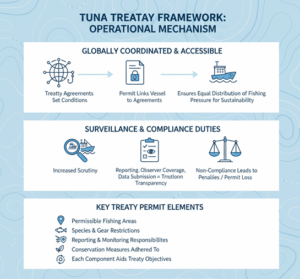
Globally coordinated and available
Treaty agreements set out who can fish where and under what conditions. The permission connects personal boat to these agreements.
Coordination allows equal distribution of fishing pressure among participants. This avoids overfishing by any one party and ensures long-term sustainable stocks.
Surveillance and compliance duties
Fisheries covered by the treaty require more examination. Most likely, they will all have similar requirements in terms of reporting, observer coverage, and submission of data. These measures ensure transparency and accountability.
You need to comply with the regulations throughout the operation. If you do not meet the conditions you may be liable to a penalty or lose your permission to operate your business.
The treaty permits have the following elements
- Permissible fishing areas.
- Restrictions on species and gear.
- Responsibilities involving reporting and monitoring.
- Conservation measures adhered to.
- Every component aids treaty objectives.
Regarding regulatory intensity
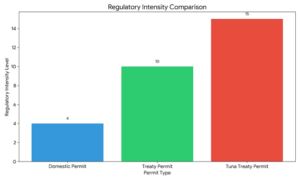
- The extent of regulation management scales greatly from local/domestic to international treaty-based management.
- The difference between domestic permits and treaty permits is that the former are governed by only one country’s law whereas the latter in compliance with multilateral agreement. They will thus involve more administrative work and reporting.
- The Tuna Treaty governs fisheries that cover large areas, so regulators must conduct more monitoring to enforce rules across a broader range of boundaries.
Treaty Permit Holders: A Practical Guide
Obtaining tuna treaty permit demands adequate preparation. A permit condition review should be conducted by operators before each season. Awareness does away with compliance issues.
Report Accurately Essential Shared stocks need data to be effectively managed. Hand in applications and submission in time.
Operational planning of the fishery should incorporate fishing zones and seasonal measures specified in the treaty. All aligning fishing effort with rules established under treaty enhances efficiency and reduces risk of enforcement.
Communication with Crew Members is equally important. Everybody onboard must understand reporting and compliance obligations. Togetherness insight allows for accurate operations.
Beneficial common practices are
- Frequently evaluate treaty permit restrictions.
- Ensure timely submission of all reports.
- Keep an eye on fishing zones and their seasonal limits.
- Keep orderly compliance documents.
These steps facilitate smooth operations.
Why the Permit for the Tuna Treaty matters
The Tuna Treaty Permit is necessary for the management of tuna fisheries under international agreements. Commercial Fishing Permits Center It gives useful methods to fish according to fishing and conservation and co-operations.
The authorize the fisherman and provide clarity for operation. It aids managers in the assessment, gathering of information, and performance of international cooperation. It helps tuna harvested responsibly for global markets.
Learn what the law requires of you and the best practices to fish with confidence. Tuna Treaty Permit has been key for effective tuna fisheries management internationally.
No Comments
Be the first to start a conversation